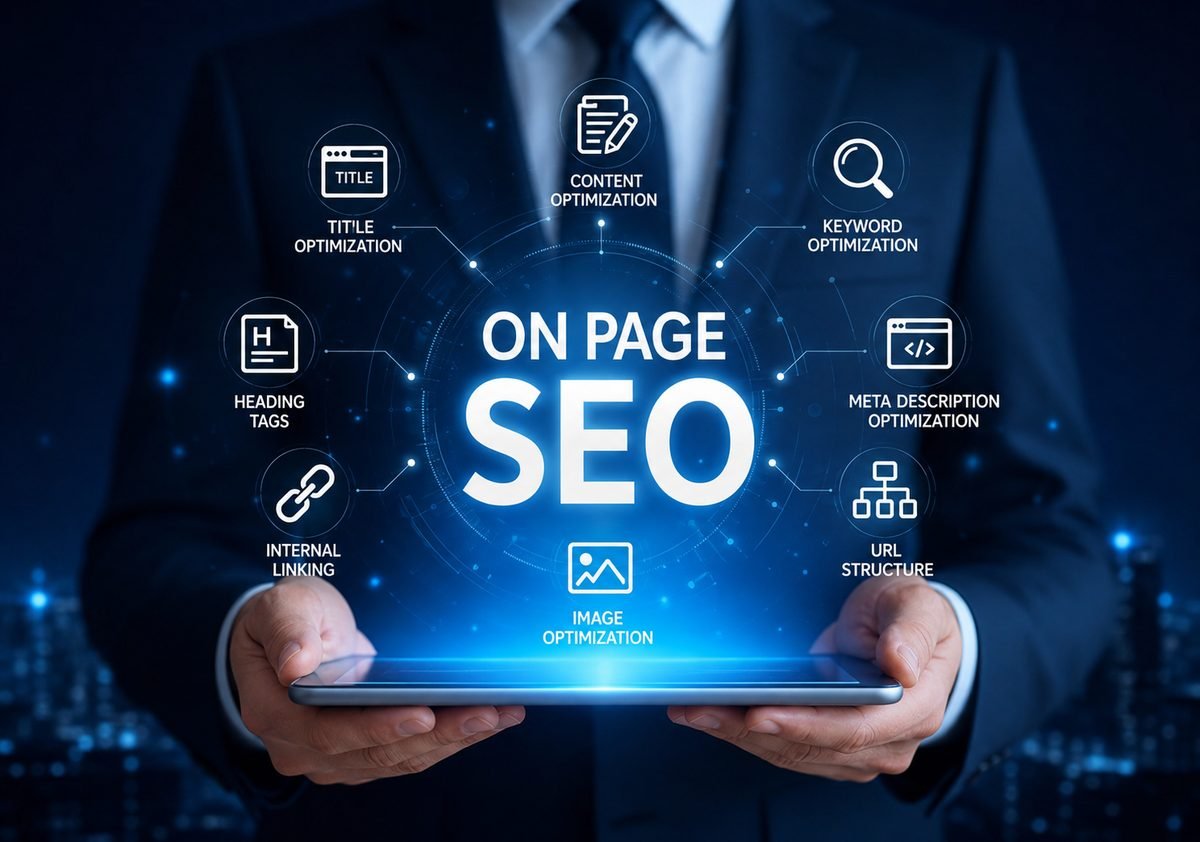
On-Page SEO: The Foundation of a Successful SEO Strategy
In today’s digital world, having a website is not enough. Every business wants to appear higher in search engine results and attract more visitors. However, achieving better rankings requires more than just creating a website. Search engines need to understand your content, and users need to find value when they visit your pages. This is where On-Page SEO becomes an important part of any successful SEO strategy.
On-Page SEO focuses on improving the elements within your website to make pages more search engine-friendly and user-focused. From content optimization and keyword placement to page structure and technical improvements, every element plays a role in helping your website perform better.
Unlike off-page SEO, where you depend on external factors like backlinks, On-Page SEO gives you direct control over your website. By making the right improvements, you can increase visibility, improve user experience, and create a stronger foundation for long-term SEO growth.
What Is On-Page SEO?
On-Page SEO refers to the process of optimizing individual website pages to improve their rankings in search engines and provide a better experience for visitors.
It includes optimizing different elements such as:
- Website content
- Title tags
- Meta descriptions
- Headings
- Keywords
- Internal links
- Images
- URLs
- Page speed
- Mobile experience
The main purpose of On-Page SEO is to help search engines understand what your page is about while making it useful and easy to navigate for users.
When a page is properly optimized, search engines can better match it with relevant search queries, increasing the chances of attracting organic traffic.
Importance of Keyword Optimization
Keywords are one of the most important parts of On-Page SEO. They help search engines understand the topic and purpose of your content.
Before creating a page, proper keyword research should be performed to identify what terms your target audience is searching for. Choosing the right keywords allows you to create content that matches user intent.
However, keyword optimization does not mean adding keywords everywhere. Modern search engines focus on content quality and natural language. Overusing keywords can make content difficult to read and may negatively affect rankings.
Keywords should be placed naturally in important areas, including:
- Page title
- Main heading
- First paragraph
- Subheadings
- Meta description
- Image alt text
- URL
A balanced approach helps search engines understand your content without affecting the user experience.
Creating High-Quality SEO Content
Content is the heart of On-Page SEO. A properly optimized page with poor content will not provide long-term results. Search engines prioritize content that is useful, informative, and relevant to users.
High-quality SEO content should answer user questions, solve problems, and provide valuable information.
Good content usually includes:
- Clear explanations
- Relevant examples
- Proper formatting
- Updated information
- Easy-to-read paragraphs
Instead of writing only for search engines, businesses should focus on creating content for real people. When users find your content helpful, they are more likely to stay longer on your website and engage with your pages.
Optimizing Title Tags and Meta Descriptions
Title tags and meta descriptions are important elements of On-Page SEO because they appear in search results.
A title tag tells users and search engines what your page is about. A strong title should include the main keyword and encourage users to click.
For example:
Weak title: SEO Services
Optimized title: Professional SEO Services to Improve Website Rankings
Meta descriptions provide a short summary of the page. Although they are not a direct ranking factor, they can improve click-through rates by making your search result more attractive.
A well-written meta description should clearly explain the benefit users will get from visiting your page.
Importance of Headings and Page Structure
Proper content structure improves both readability and SEO performance. Headings help users quickly understand the information on a page.
The H1 tag represents the main topic, while H2 and H3 headings divide the content into smaller sections.
A clear heading structure allows search engines to understand the relationship between different topics within your content.
For example:
- H1: Complete Guide to On-Page SEO
- H2: Keyword Optimization
- H2: Content Improvement
- H2: Internal Linking Strategy
This structure makes the page easier to read and crawl.
Internal Linking for Better Website Navigation
Internal linking connects different pages within the same website. It helps users discover more content and allows search engines to understand your website structure.
A strong internal linking strategy can:
- Improve user navigation
- Distribute page authority
- Increase time spent on the website
- Help search engines discover pages
For example, an article about On-Page SEO can link to related topics like technical SEO, keyword research, and content marketing.
These connections create a better experience for visitors and strengthen your website’s overall SEO.
Image Optimization and User Experience
Images make content more engaging, but they also need proper optimization. Large image files can slow down your website and negatively affect user experience.
Image optimization includes:
- Compressing image sizes
- Using descriptive file names
- Adding alt text
- Choosing suitable formats
Alt text helps search engines understand images and improves accessibility for users who rely on screen readers.
Mobile Optimization and Page Speed
Website performance has become an important part of SEO. Users expect websites to load quickly and work properly on mobile devices.
A slow website can increase bounce rates because visitors may leave before the page loads completely.
Improving page speed includes optimizing images, reducing unnecessary code, and using reliable hosting. A mobile-friendly website also ensures that users have a smooth experience across different devices.
Conclusion
On-Page SEO is the foundation of a successful SEO campaign. It helps search engines understand your website while improving the experience for your visitors.
By focusing on keyword optimization, quality content, proper page structure, internal linking, image optimization, and website performance, you can create pages that have a better chance of ranking higher.
SEO is not about quick results. It requires continuous improvement and attention to detail. When On-Page SEO is done correctly, it creates a strong foundation that supports long-term organic growth and helps your website attract the right audience.