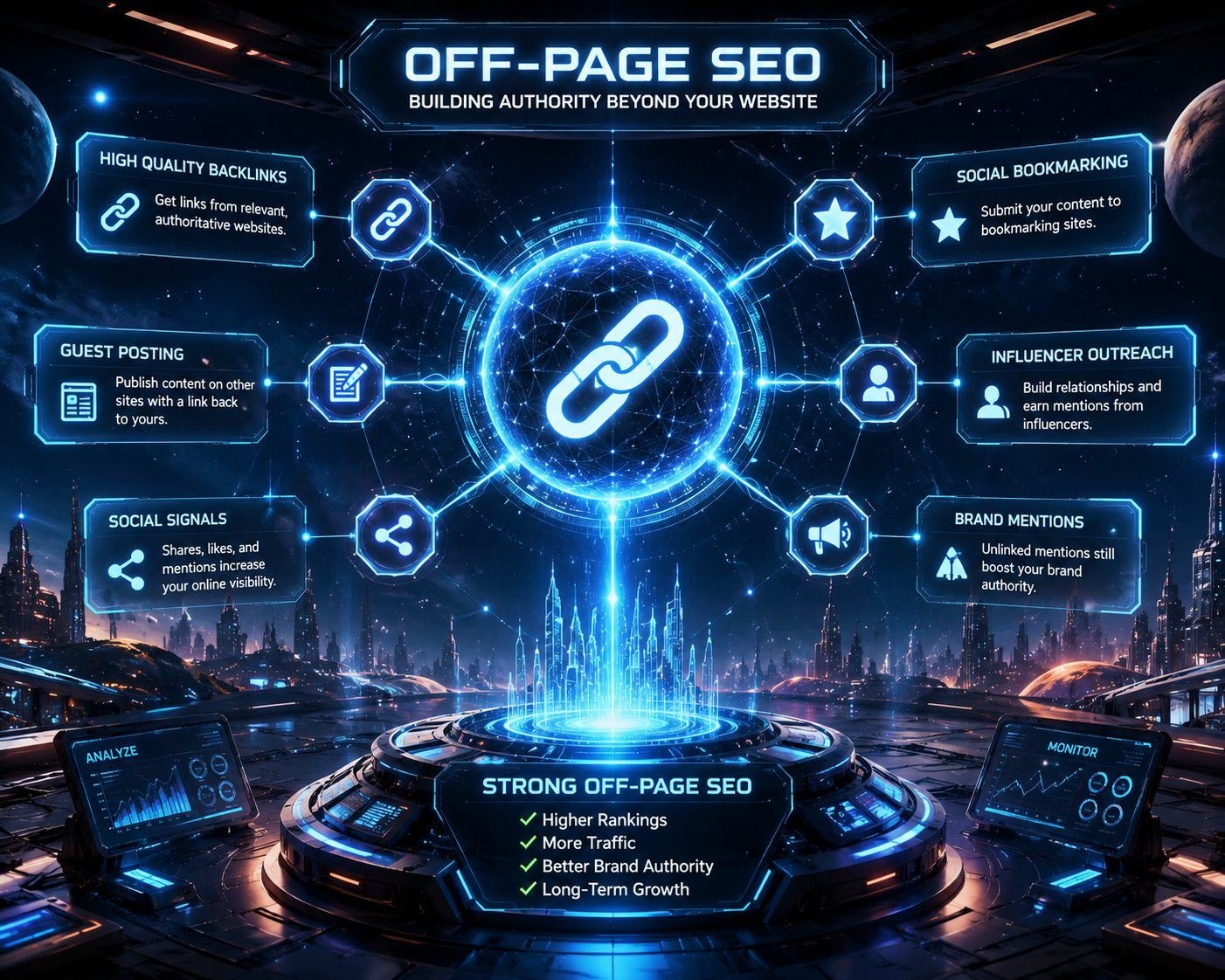
Off-Page SEO: The Complete Guide to Building Website Authority and Rankings
Search engine optimization is not only about making changes inside a website. While on-page SEO focuses on improving content, keywords, website structure, and user experience, off-page SEO focuses on everything that happens outside your website to improve its authority, trust, and visibility. It plays an important role in helping search engines understand how reliable and valuable a website is compared to its competitors.
Off-page SEO is mainly about building a strong online reputation. When other trusted websites mention, recommend, or link to your website, search engines consider it a positive signal. These external signals can help improve rankings, increase organic traffic, and establish your brand as an authority in your industry.
What Is Off-Page SEO?
Off-page SEO refers to all optimization activities performed outside your own website to improve search engine rankings. The main goal is to increase website authority and build trust with both users and search engines.
The most common off-page SEO activity is link building, where other websites provide backlinks to your pages. However, modern off-page SEO is much broader than just collecting links. It includes brand mentions, digital PR, social media presence, influencer collaborations, online reviews, and community engagement.
Search engines like Google use hundreds of ranking factors, and off-page signals help determine whether a website deserves higher visibility in search results.
Why Is Off-Page SEO Important?
A website can have excellent content and perfect technical optimization, but without authority, it may struggle to compete in competitive search results. Off-page SEO helps create credibility and demonstrates that other people and websites trust your content.
High-quality backlinks from relevant websites can improve domain authority and help search engines discover important pages. For example, if a respected industry website links to your article, it acts like a recommendation that your content provides useful information.
Off-page SEO also helps businesses build brand awareness. When your website appears on different platforms, users become more familiar with your brand, which can increase direct traffic and customer trust.
The Role of Backlinks in Off-Page SEO
Backlinks remain one of the most important parts of off-page SEO. A backlink is a link from another website pointing to your website. However, not all backlinks provide the same value.
A quality backlink usually comes from a trusted, relevant, and authoritative website. For example, a technology website receiving a link from a respected software publication is more valuable than receiving a link from an unrelated low-quality website.
Successful link building focuses on earning natural links rather than creating hundreds of low-quality links. Search engines have become smarter and can identify manipulative link-building practices that may result in ranking penalties.
Effective Off-Page SEO Strategies
There are several strategies that can help improve your website authority and online presence.
Guest posting is one popular method where you contribute valuable articles to relevant websites and receive a backlink in return. When done correctly, guest posting helps build relationships, increase exposure, and attract referral traffic.
Digital PR is another powerful strategy. Creating valuable research, industry reports, expert opinions, or unique content can attract attention from journalists and publishers who may naturally link to your website.
Content marketing also supports off-page SEO. High-quality content such as detailed guides, case studies, infographics, and original research has a higher chance of being shared and referenced by other websites.
Social Media and Brand Mentions
Although social media signals are not direct ranking factors, they can indirectly support SEO success. Sharing content on platforms like Facebook, LinkedIn, X, and industry communities can increase visibility and bring more users to your website.
Brand mentions are also valuable. Even when another website mentions your company without linking, it can contribute to brand awareness and online reputation. Search engines are becoming better at understanding brand authority and entity recognition.
The Importance of Online Reviews
For local businesses, online reviews are a major part of off-page SEO. Positive reviews on platforms like Google Business Profile, Yelp, and industry-specific review websites can improve local search visibility.
Reviews also influence customer decisions. A business with many positive reviews appears more trustworthy and is more likely to attract potential customers.
Encouraging satisfied customers to share genuine feedback is a simple but effective way to strengthen your online presence.
Common Off-Page SEO Mistakes to Avoid
Many websites make mistakes by focusing only on the quantity of backlinks instead of quality. Buying large numbers of spammy links or using automated link-building tools can damage website rankings.
Another common mistake is building links from irrelevant websites. Search engines value relevance, so backlinks should come from websites related to your industry or topic.
Ignoring brand reputation is also a mistake. Off-page SEO is not only about links; it is about building trust, authority, and recognition across the internet.
How to Measure Off-Page SEO Success
Tracking off-page SEO performance requires monitoring several important metrics. Backlink growth, referring domains, domain authority, organic traffic improvements, keyword rankings, and brand mentions can help measure progress.
SEO tools such as Ahrefs, Semrush, and Moz can provide valuable insights into backlink profiles and competitor strategies. Regular analysis helps identify opportunities and remove harmful links that may affect performance.
Final Thoughts
Off-page SEO is an essential part of a complete SEO strategy. It helps websites build authority, improve rankings, and gain trust from both search engines and users. While it requires time and consistent effort, the results can create long-term growth.
The most successful off-page SEO campaigns focus on quality relationships, valuable content, and genuine brand building rather than shortcuts. By earning trusted backlinks, improving online reputation, and creating meaningful connections across the web, businesses can strengthen their position in search results and achieve sustainable organic growth.